
The Regency era in England (1811-1820) was a time of societal evolution, with a growing fascination for science, exploration, and the natural world. One of the ways this interest manifested was through menageries—early forms of zoos—where exotic animals were exhibited for public viewing. These menageries, although not modern in their approach to animal welfare, captivated audiences and served as a symbol of England’s expanding reach across the globe. This article explores what these zoos were like, the types of animals they housed, and some notable stories that made headlines during this intriguing period.
What were the menageries like?
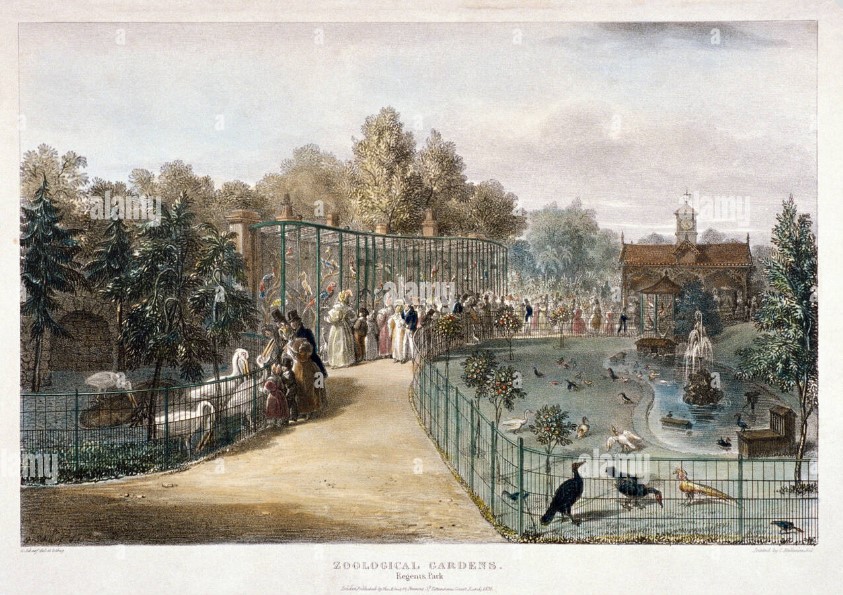
In Regency England, formal zoos as we know them today didn’t exist, but menageries filled the role of public animal exhibitions. These establishments were often privately owned and housed a collection of exotic animals imported from across the world. Menageries could be found in both rural estates and in cities like London, where entrepreneurs and noblemen alike showcased their rare animals to the curious public.
One of the most famous menageries was located in the Tower of London, which had housed animals since the 13th century. By the Regency era, it was still a significant attraction, home to lions, tigers, and other exotic creatures. Additionally, menageries like Pidcock’s Menagerie in Exeter Change and Polito’s Menagerie, which toured throughout the country, became wildly popular.
What animals?
Regency-era menageries boasted a wide array of exotic animals, many of which were entirely new to the British public. Some of the most popular animals on display included:
- Lions and Tigers: These big cats were major attractions, considered the ultimate symbols of power and majesty.
- Elephants: Awe-inspiring and often used in parades, elephants were frequently exhibited to show off the empire’s global reach.
- Giraffes: Fascination with these long-necked creatures reflected England’s deepening interest in African exploration.
- Monkeys and Apes: These primates were a source of entertainment due to their human-like behavior, often leading to speculation about evolution and natural history.
- Exotic Birds: Brightly colored parrots and other tropical birds were adored for their appearance and rarity.
- Kangaroos: Recently discovered by European explorers, kangaroos were novel creatures that sparked great interest.
The menageries also featured more unusual animals, such as crocodiles, antelopes, zebras, and hyenas. Often these animals were transported in poor conditions, and the limited knowledge of their care meant many did not survive for long in captivity.
From the news of the time
One of the most famous cases during the Regency era involved a lion named Nero, exhibited in Exeter Change. Nero became infamous after he reportedly attacked and killed a young boy who had wandered too close to his cage. This incident caused public outrage and intensified the debate about the dangers of keeping such powerful animals in captivity.
Another notable event took place in 1826 when a giraffe was gifted to King George IV by Muhammad Ali Pasha of Egypt. This was the first giraffe to be seen in England and caused an immediate sensation. Nicknamed the “Queen’s Giraffe,” the animal was housed in the Royal Menagerie at Windsor and quickly became a symbol of British imperial expansion and diplomacy.
In addition to specific animals, the menageries themselves were subjects of interest and even controversy. Critics pointed out the harsh conditions under which many of these animals were kept. This tension grew as scientific awareness of animal behavior and natural habitats expanded during the early 19th century, leading to calls for more humane treatment of animals.
Interest in natural history
The popularity of menageries during the Regency era also coincided with the rise of natural history as a formal discipline. Collections of exotic animals were often linked to colonial explorations and the growth of the British Empire. The era’s wealthiest individuals often sponsored expeditions to far-flung lands and collected animals as trophies of exploration.
Naturalists and scientists visited these menageries to study these creatures, contributing to the growing body of knowledge about zoology. These establishments played an important role in shaping public understanding of the natural world, despite their rudimentary conditions.
FAQs
Did Regency England have official zoos?
No, official zoos like those we know today did not exist, but menageries were common, serving as early forms of animal exhibitions.
What types of animals were in Regency menageries?
Regency menageries housed a variety of exotic animals, including lions, tigers, giraffes, monkeys, elephants, and more.
Were there any famous animals or events at Regency menageries?
Yes, notable stories include the lion Nero at Exeter Change and the arrival of the first giraffe in England, which created a public sensation.
How were the animals treated in Regency menageries?
Animal welfare was not well understood in the Regency era, and many animals were kept in poor conditions, often leading to controversy and public outcry.
The menageries of Regency England offer a fascinating glimpse into the era’s burgeoning interest in the natural world and the reach of the British Empire. Though often rudimentary in their treatment of animals, these establishments paved the way for future zoological institutions and contributed to the public’s growing curiosity about exotic creatures. While the era’s menageries may seem primitive by modern standards, they played a critical role in shaping the Regency public’s understanding of the broader world beyond their shores.

