
Regency fashion silhouettes were revolutionary, transforming the heavy, ornate styles of the Georgian era into light, flowing lines inspired by ancient Greece and Rome. Far from mere aesthetics, these shapes symbolised neoclassical ideals of natural beauty, freedom, and a break from rigid corsetry—perfect for a society embracing post-Revolutionary simplicity and elegance.
The empire waist
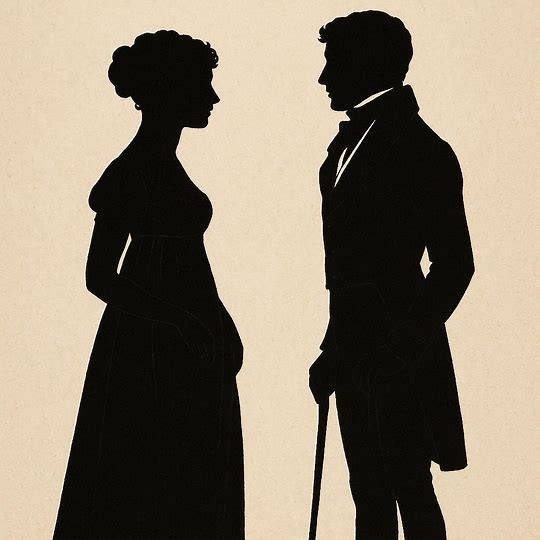
The hallmark of Regency women’s fashion was the high-waisted empire silhouette, where the bodice fitted snugly just beneath the bust, allowing the skirt to fall in soft, straight folds to the floor.
- This design echoed the chitons and peplos of classical statues unearthed in Herculaneum and Pompeii, promoting an ethereal, goddess-like figure that celebrated the “natural” body over artificial shaping.
- It signaled youth, purity, and marital status—debutantes in sheer white muslin appeared innocent and virginal, while married women added trims for sophistication.
- Practical perks included comfort for dancing at balls and pregnancy, as the loose skirt accommodated changing figures without constriction.
Men’s tailored tailcoats
For gentlemen, the silhouette shifted to a fitted tailcoat with a high collar, nipped waist, and flared tails over tight trousers or breeches, creating a sharp, athletic hourglass shape.
- Inspired by military uniforms, this look projected discipline, masculinity, and readiness—think Beau Brummell’s dandy ideal of understated power.
- The high waist and minimal bulk rejected the frock coats of prior decades, emphasizing height and poise for duels, hunts, or Almack’s assemblies.
- Colors stayed muted (black, navy, olive), reinforcing sobriety amid Napoleonic Wars, yet crisp white linens added a flash of Regency flair.
Pelisses and spencers
Outerwear refined the silhouette further: the pelisse (a long, fur-trimmed coat) and spencer (cropped jacket) preserved the high waist while adding warmth and status.
| Silhouette feature | Example | Symbolic meaning |
|---|---|---|
| Empire Waist Gown | White muslin round gown | Classical purity, fluid movement |
| Tailcoat & Trousers | Frock coat with Hessian boots | Military precision, social rank |
| Pelisse Overcoat | Silk-lined with frog closures | Wealth, travel-ready elegance |
| Spencer Jacket | Embroidered short bolero | Modesty for daytime promenade |
Evolution and influences
Early Regency (1800-1810) favored ultra-simple columnar shapes in fine Indian muslin, but by 1815, ruffles, tucks, and gigot sleeves added volume, transitioning toward Romantic fussiness. French Revolution’s anti-aristocratic ethos ditched panniers and stays, while global trade brought affordable cottons. Royals like Princess Charlotte championed these looks, making slim, vertical lines a badge of modern refinement.
Facts
- Muslin gowns were scandalously sheer—ladies dusted diamond powder on their bodies to shimmer under candlelight at balls.
- The silhouette’s rise coincided with longer hemlines revealing ankles and dainty slippers, a bold visibility after centuries of concealment.
- By 1820, waists began dropping as Gothic Revival crept in, but the empire line defined Regency’s enduring legacy of liberated grace.
Regency silhouettes weren’t just clothes—they whispered of revolution, romance, and rebirth, draping the era’s dreams in delicate fabric. Spot one in a portrait or modern homage, and you’ll see history swaying elegantly across the room.
 Susan Walsh - Author