
During Regency England, several influential music creators and compositions played significant roles in shaping the musical landscape.
Influential composers
- Muzio Clementi: Known as the “Father of the Pianoforte,” Clementi was a prominent composer and pianist who brought Continental music to England. His compositions and performances were highly regarded, and he was influential in popularizing the pianoforte in English society.
- Joseph Haydn and Wolfgang Amadeus Mozart: Although not English, these composers were widely admired and performed in Regency England. Their works, such as operas, oratorios, symphonies, and sonatas, exemplified the Classical style and were highly influential.
- Ludwig van Beethoven: While Beethoven’s music began to transition towards the Romantic era during the late Regency period, his early works were still rooted in the Classical style. His compositions were gaining recognition in England, marking the beginning of a new musical era.
Popular music and dance
- Scottish and Irish airs: These folk melodies were celebrated for their cultural heritage and were often incorporated into classical compositions. They remained popular throughout the Regency era, influencing the lively nature of Regency dances.
- Country dances: These social dances, including longways sets, square sets, and circle dances, were staples of Regency balls. They were enjoyed by all classes and were featured in Austen’s novels, such as Persuasion.
- Theatre music: Popular songs from stage productions were widely enjoyed, with composers like Charles Dibdin and Stephen Storace contributing to this genre.
The Regency period was a time of musical transition, with influences from both the Classical and emerging Romantic styles. Composers like Clementi, Haydn, Mozart, and Beethoven were highly influential, while traditional folk dances and theatre music also played significant roles in shaping the musical culture of the era.
How did people bring music into their homes
Regency dinner parties, music played a significant role in creating a lively and engaging atmosphere.
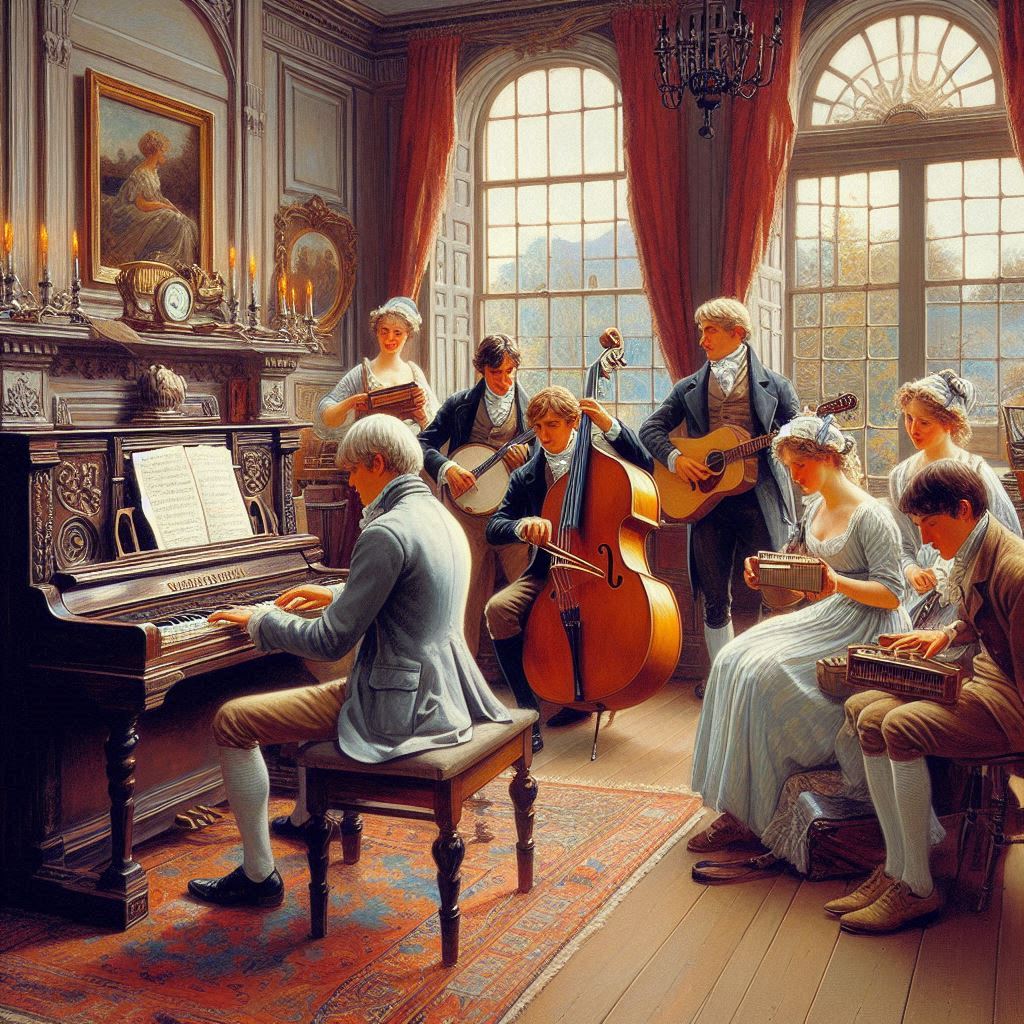
- Amateur performances: Most households relied on amateur family members to provide music. Young ladies, in particular, were expected to be “accomplished” in music, meaning they could play instruments like the pianoforte or harp, or sing. These performances often took place in the drawing room after dinner, where guests would gather to listen and socialise.
- Instrumental music: Instruments such as the pianoforte, harp, violin, and flute were popular choices for musical performances. These instruments were often played by family members or guests who were musically inclined.
- Musicales: More formal musicales were also common, where guests would gather to showcase their musical talents. These events were opportunities for socialising and could even help attract potential suitors.
- Dance music: After dinner, parties often transitioned into dance sessions, featuring popular Regency dances like the cotillion or country dances. Music for these dances was typically provided by a musician or a small ensemble, depending on the resources available.
- Vocal performances: Singing was another form of entertainment at dinner parties. Guests might sing solo or in groups, often accompanied by instrumental music. These performances added to the convivial atmosphere and provided a chance for social interactions.
Examples from Austen’s Works
In Jane Austen’s novels, music is frequently mentioned as part of social gatherings. For example, in Pride and Prejudice, music is a central element of the evening entertainments at Netherfield, where Elizabeth Bennet and her sisters engage in musical performances with the Bingley sisters.
Musical performances at Regency dinner parties were an integral part of the social experience, fostering a sense of community and enjoyment among guests. Whether through amateur performances, formal musicales, or dance music, music played a vital role in creating memorable evenings during the Regency era.
 Susan Walsh - Author