
The Regency era (1811–1820) was a time of elegance, societal change, and significant political events. This short-lived but crucial period was marked by influential figures who shaped the cultural, political, and intellectual landscape of England. From statesmen and writers to social reformers and royalty, their legacies left indelible marks on history.
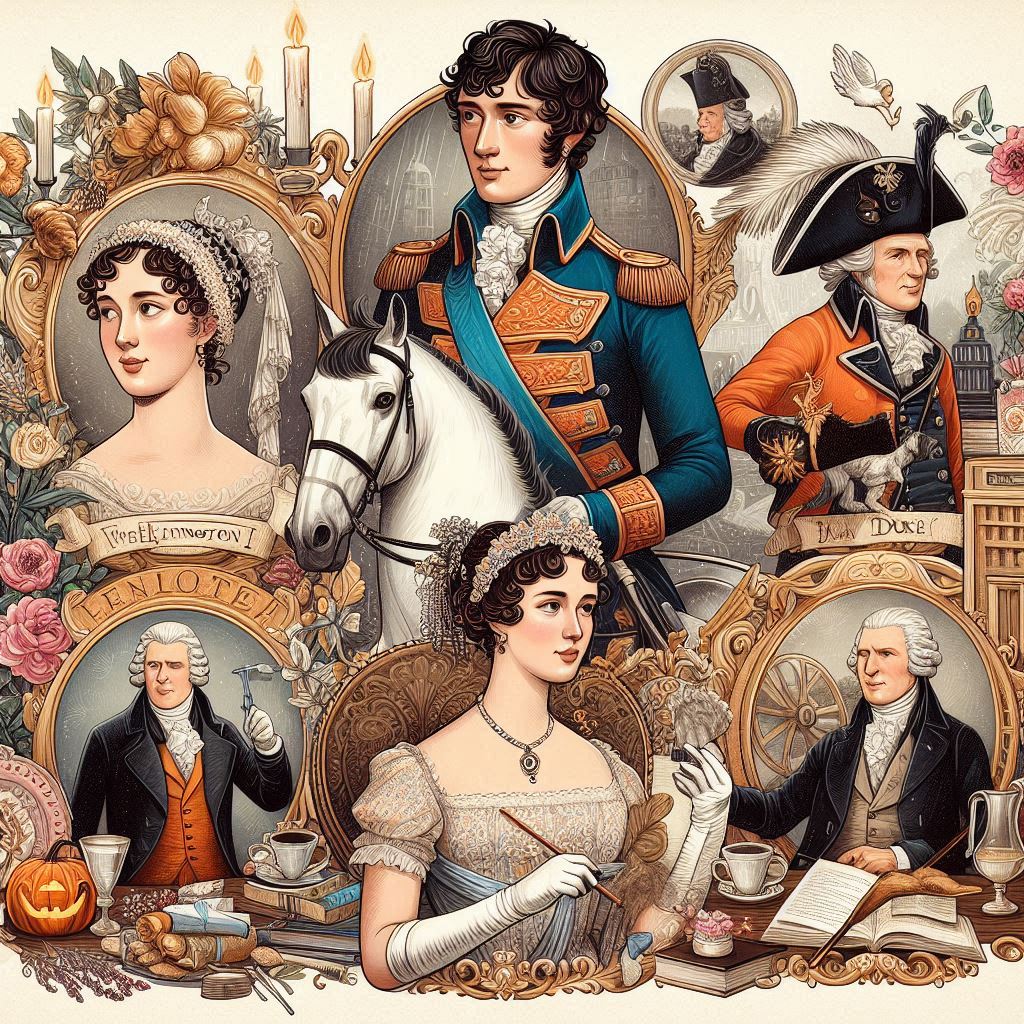
1. The Prince Regent (George IV)
As the namesake of the Regency era, George IV, then Prince Regent, played a pivotal role during this period. His extravagant lifestyle and passion for the arts led to the flourishing of Regency architecture and culture. Under his patronage, iconic buildings like the Brighton Pavilion and Regent’s Park were constructed, which remain symbols of his influence. Although controversial for his excessive spending and personal indulgences, George IV’s love of luxury helped usher in a refined cultural aesthetic that defines the period.
Achievements:
- Patronized Regency architecture and arts.
- Oversaw cultural advancements despite economic and political turbulence.
2. Jane Austen
One of the most iconic writers of the Regency period, Jane Austen’s novels such as Pride and Prejudice, Emma, and Sense and Sensibility offered sharp critiques of the class and gender dynamics of her time. Her keen observations of Regency society, combined with her wit and mastery of prose, solidified her place as one of the greatest literary figures in English history. Austen’s portrayal of the lives of the landed gentry has made her work timeless, influencing literature, films, and culture.
Achievements:
- Produced groundbreaking literary works reflecting Regency society.
- Pioneered the modern novel of manners and romantic fiction.
3. Arthur Wellesley, Duke of Wellington
The Duke of Wellington, a highly respected military figure, rose to prominence during the Napoleonic Wars, particularly at the Battle of Waterloo in 1815. His victory over Napoleon established him as a national hero and solidified Britain’s power in Europe. Beyond his military prowess, Wellington later became a political leader, serving as Prime Minister and influencing British domestic and foreign policy.
Achievements:
- Defeated Napoleon at the Battle of Waterloo.
- Played a significant role in British politics and policy-making.
4. Lord Byron
George Gordon Byron, more commonly known as Lord Byron, was a leading figure of the Romantic movement and an embodiment of the era’s rebellious spirit. His poetry, characterized by emotion, individualism, and political radicalism, became incredibly popular during his lifetime. Byron’s literary contributions, combined with his charismatic and scandalous personal life, made him one of the most famous poets of his time.
Achievements:
- Pioneered Romantic poetry with works like Don Juan and Childe Harold’s Pilgrimage.
- Embodied the Regency ideals of romanticism, rebellion, and individualism.
5. Princess Caroline of Brunswick
Princess Caroline, the estranged wife of the Prince Regent, was a figure of sympathy and controversy. Their tumultuous marriage was a public spectacle, and Caroline became a symbol of resistance against the Prince’s excesses. When she attempted to attend her estranged husband’s coronation in 1821, she was barred from entry, creating public uproar and highlighting the strained relationships within the monarchy. Her struggles and ultimate rejection by her husband represented a larger societal battle over the roles and rights of women during the Regency era.
Achievements:
- Became a figure of public sympathy in opposition to the Prince Regent.
- Represented challenges faced by women in a male-dominated society.
FAQs:
Q1: Who had the most cultural influence during the Regency era?
Jane Austen and Lord Byron had significant cultural impacts. Austen revolutionized the novel, while Byron epitomized the spirit of Romanticism, influencing literature and art.
Q2: Why was the Prince Regent so influential?
The Prince Regent, later George IV, was influential due to his patronage of architecture and the arts. His reign also marked significant societal and cultural shifts.
Q3: How did the Duke of Wellington shape Regency England?
As a military leader, the Duke of Wellington secured Britain’s victory over Napoleon, establishing the nation’s dominance in Europe. His political career also shaped Britain’s post-war policies.
Q4: How did Regency England’s politics differ from its cultural landscape?
Politics in Regency England were turbulent, with wars and economic challenges. However, culturally, it was an era of refinement in literature, art, and architecture, largely driven by elite patronage.
The Regency period was brief but filled with transformative figures who left lasting marks on history. From the opulent lifestyle of the Prince Regent to the literary brilliance of Jane Austen, these influential figures shaped the cultural, political, and intellectual framework of their time. Understanding their contributions offers valuable insight into the evolution of British society during a fascinating historical period.
The legacies of these individuals live on, whether through the preserved architecture, beloved novels, or celebrated victories that continue to influence and inspire today.
 Susan Walsh - Author