
During the Regency era (1811-1820), fashion was not merely a matter of personal style or comfort. The colours of the clothes worn by women and men of this time carried significant meaning, reflecting their social status, personality, and even political affiliations. Colour choice played a crucial role in Regency society, where everything from subtle shades to bold hues spoke volumes.
In this article, we’ll explore the symbolism of key colours in Regency England and how they shaped the era’s fashion and social landscape.
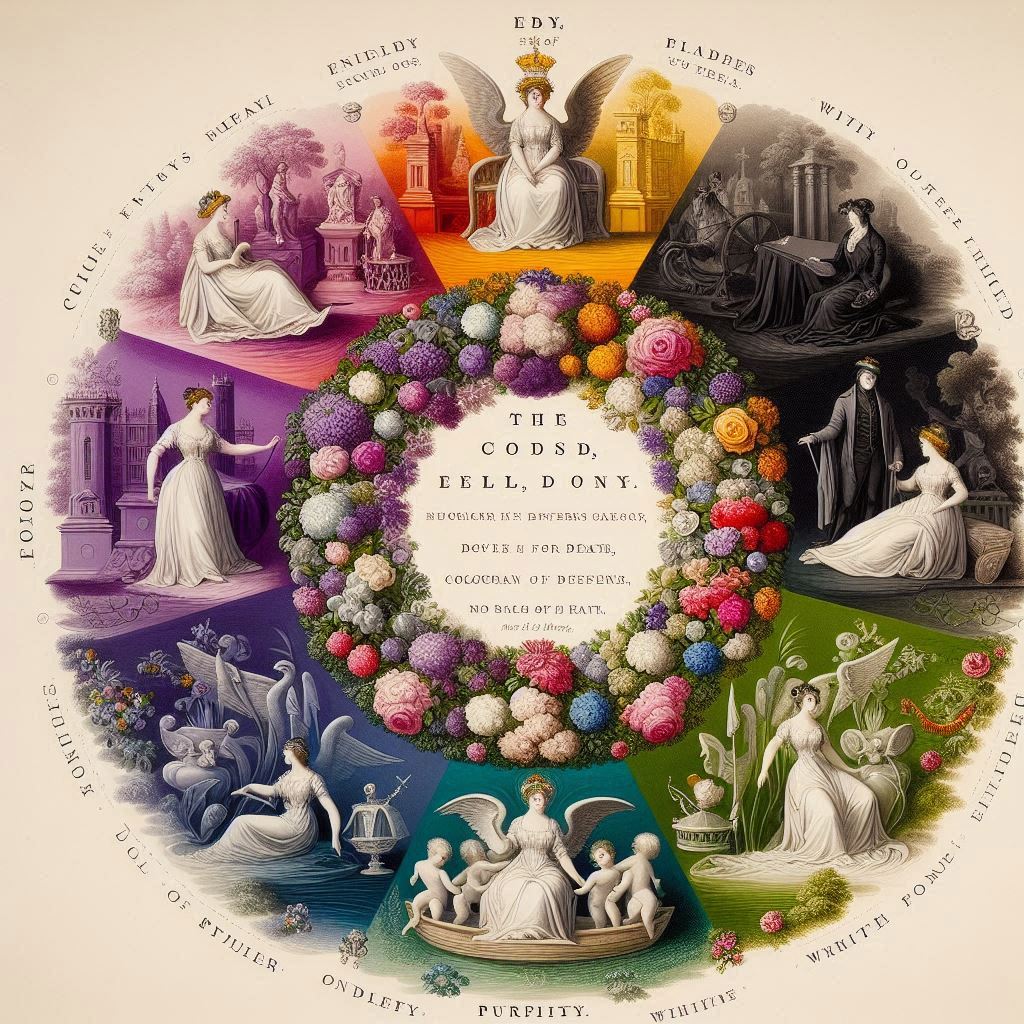
White: Purity and Innocence
White was one of the most prominent colours worn by women in Regency England. Often associated with purity, youth, and innocence, it was the go-to colour for young debutantes entering society for the first time. White dresses were particularly favored for balls and other social events, with their association with the romantic ideal of femininity. However, white was not only for the unmarried; married women also wore white, especially for evening events and formal occasions.
At this time, white muslin gowns were highly fashionable. These dresses, often delicately embroidered, gave a light and ethereal appearance and reinforced the notion of virtuousness. White also represented new beginnings, which is why it was a common choice for weddings.
Black: Mourning and Formality
In Regency England, black was the colour of mourning and formality. When members of the upper class experienced the loss of a family member, strict mourning attire was required, often for extended periods. A widow, for instance, might be expected to wear black for up to two years. However, black was not solely reserved for mourning; it also became fashionable for formal occasions, particularly for men.
Men of the era often wore black or dark-coloured evening coats, symbolizing seriousness and professionalism. Even though black was associated with grief, it also conveyed sophistication and authority, particularly among gentlemen.
Red: Passion and Power
Red was a colour that commanded attention in Regency society. Whether in the form of a soldier’s uniform or a fashionable gown, red symbolized passion, power, and wealth. Scarlet, in particular, was worn by officers in the British military and was associated with bravery and leadership.
For women, red garments—especially during evening engagements—implied confidence and sensuality. Deep red dresses were often worn by those looking to make a bold statement, perhaps signaling a desire for independence or rebellion against societal norms. This vibrant hue was not commonly worn by the demure, as it carried connotations of strong will and emotion.
Green: Fertility and Wealth
Green was often linked with fertility, prosperity, and wealth. In Regency England, a lush green dress would convey that the wearer was connected with nature, beauty, and growth. Additionally, green garments indicated a woman’s connection to wealth, as rich green dyes were expensive and hard to come by.
The shade of green worn also mattered. Deep emerald greens often indicated financial prosperity, while lighter, mossy greens were softer and represented new life, youthfulness, and hope. Many young women wore green at garden parties or daytime events to suggest freshness and a lively spirit.
Blue: Calm and Loyalty
In Regency fashion, blue was associated with calmness, loyalty, and wisdom. This soothing colour was worn by both men and women who wished to convey these qualities in their appearance. Navy blue was particularly popular for gentlemen’s coats and trousers, symbolizing professionalism and reliability.
Light blue, on the other hand, was often worn by women to evoke serenity and refinement. It was seen as a peaceful colour and carried connotations of modesty and fidelity, making it a fitting choice for daytime dresses or informal social gatherings.
Yellow: Joy and Optimism
Yellow was a colour of joy, optimism, and intellect during the Regency period. Bright and sunny, yellow gowns were often worn by women looking to project cheerfulness and positivity. Though not as common as white or blue, yellow attire was favored by those with lively personalities who wished to stand out in social settings.
For men, however, yellow was less prevalent but appeared occasionally in waistcoats and accessories. These pops of colour could signal warmth and approachability, making yellow an accent rather than a dominant colour in men’s fashion.
Purple: Royalty and Ambition
Purple has long been associated with royalty, and in Regency England, this tradition held strong. The dye used to produce purple fabric was expensive, making it a symbol of wealth, ambition, and higher status. While true purple was rarely seen in everyday attire due to its cost, those who could afford it would wear it to display their power and elevated social standing.
Lighter shades of lavender and lilac were more accessible to women of various classes and were often seen in day dresses and evening gowns. These colours still retained the air of nobility but were more modest than the bold royal purples.
FAQs
1. Why was white so popular in Regency fashion?
White symbolized purity, youth, and innocence, making it popular for debutantes and formal occasions. It was also fashionable due to the lightweight muslin fabrics popular at the time.
2. What did black represent in Regency England?
Black was primarily associated with mourning, but it was also a symbol of formality and sophistication, especially for men.
3. Was red considered too bold for women to wear?
Red was a bold colour, often worn by women who wanted to make a strong statement. It symbolized passion, confidence, and sometimes rebellion against societal norms.
4. What colours were connected with wealth in Regency England?
Green and purple were strongly connected with wealth. Green represented prosperity, while purple was linked to royalty and high status due to the expensive dyes used.
5. How did men use colours to express themselves during the Regency era?
Men primarily wore darker, more muted colours such as black, navy blue, and deep reds to signal professionalism, formality, and authority. However, waistcoats and accessories provided opportunities for more colourful expressions.
Colours in Regency England were rich with meaning, carrying connotations that went far beyond mere aesthetics. From white’s association with purity to the luxurious symbolism of purple, every colour choice was a deliberate reflection of social status, personality, or circumstance. Whether at a grand ball, a modest tea gathering, or a somber funeral, these colours spoke to the unspoken rules of Regency society.
Exploring the symbolism of colours from this era not only gives us a glimpse into the lives of those who lived through it but also helps us understand the power of fashion as a language in its own right.
 Susan Walsh - Author