
Picture this: a refined lady, dressed in the finest muslin gown, gently cradling a tiny spaniel in her arms. This scene, so quintessentially Regency, speaks volumes about the era’s fascination with lap dogs. These diminutive canines, often Pugs, King Charles Spaniels, or Italian Greyhounds, were more than mere pets—they were living accessories that showcased their owner’s wealth and status.
In Jane Austen’s Pride and Prejudice, we catch a glimpse of this trend through Lady Catherine de Bourgh’s pampered lap dogs. These little creatures, much like their mistress, demanded attention and respect, mirroring the social hierarchy of the time.
Feline grace
While not as ubiquitous as dogs, cats held a special place in Regency homes. Valued for their mousing abilities and enigmatic charm, felines were often associated with independence and mystery. In literary works, cats frequently symbolized the hidden depths of characters or situations.
Consider the sly Mrs. Norris in Austen’s Mansfield Park, whose name evokes the image of a cat—watchful, cunning, and always landing on her feet in social situations.
Horses
No discussion of Regency pets would be complete without mentioning horses. These magnificent creatures were far more than mere transportation; they were symbols of wealth, freedom, and social standing. A gentleman’s horsemanship skills were as crucial to his reputation as his wit or fortune.
In Charlotte Brontë’s Jane Eyre (set slightly after the Regency period but reflecting similar values), Mr. Rochester’s mastery over his horse Mesrour speaks volumes about his character—powerful, commanding, yet with a hidden gentleness.
Exotic birds
As trade routes expanded and the British Empire grew, exotic birds became increasingly popular pets among the Regency elite. Parrots, canaries, and even peacocks added a touch of the exotic to English homes, serving as conversation pieces and status symbols.
In Mary Shelley’s Frankenstein, the ill-fated Justine Moritz is framed for murder when a valuable exotic bird is found in her possession—a stark reminder of how these pets were viewed as prized possessions.
Small mammals
Rabbits, guinea pigs, and even the occasional squirrel found their way into Regency households as pets. These small mammals were often favored by children and young ladies, seen as gentle and undemanding companions.
While not frequently featured in major literary works, these furry friends appear in personal letters and diaries of the time, painting a picture of everyday life and affection in Regency homes.
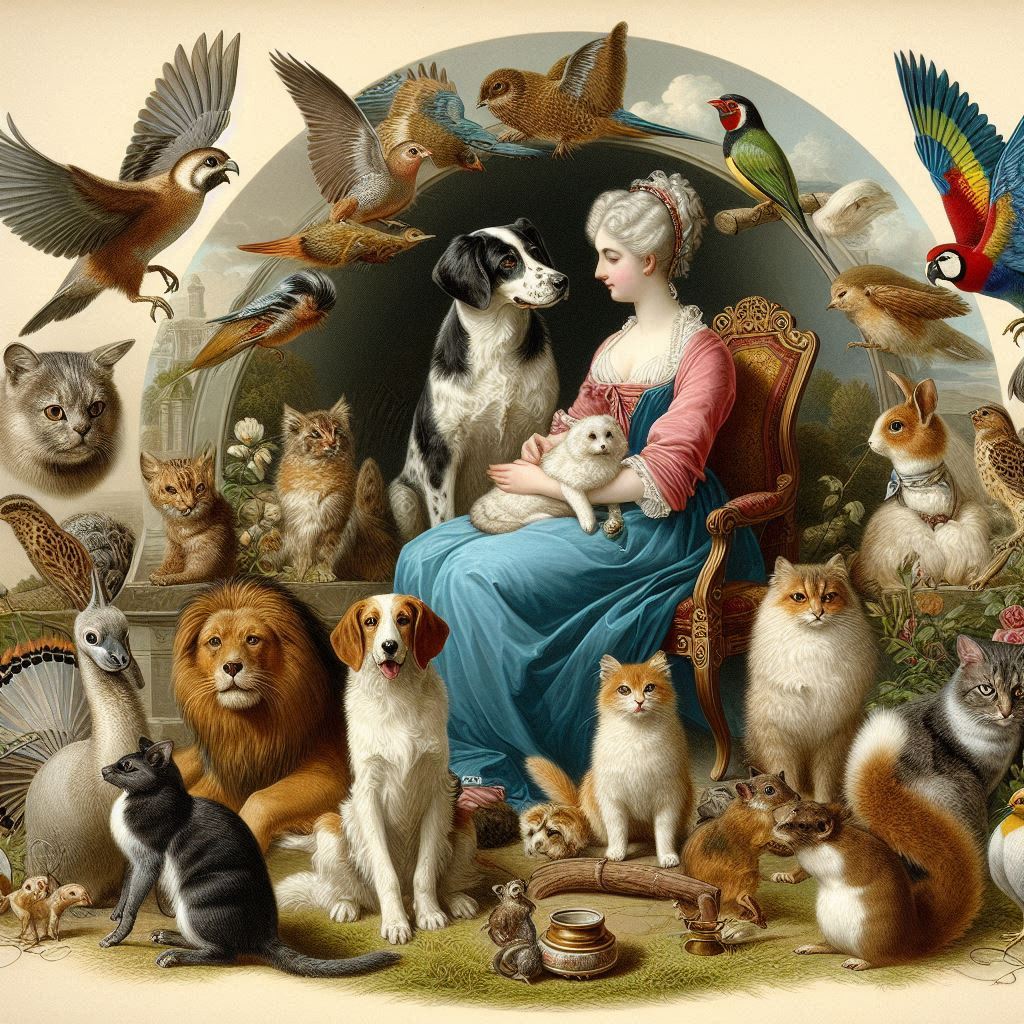
The exotic menagerie
Imagine, if you will, attending a soirée at a grand London townhouse, only to be greeted by the melodious trill of a brightly-coloured parrot or the soft padding of a sleek leopard on a leash. Such sights were not uncommon among the upper echelons of Regency society. Exotic pets served as living, breathing symbols of their owners’ wealth, worldliness, and connections to far-flung corners of the Empire.
Popular exotic pets included:
- Monkeys: Often dressed in miniature costumes, these mischievous creatures were a favourite among the fashionable set.
- Parrots: Prized for their ability to mimic human speech, these birds were both entertaining and a symbol of exotic travels.
- Big Cats: While not as common, some adventurous souls kept leopards or even tigers, though often only briefly before donating them to menageries.
In Jane Austen’s “Mansfield Park”, the worldly and somewhat morally ambiguous Mary Crawford mentions a pet monkey, hinting at her exotic tastes and unconventional nature. Similarly, in Georgette Heyer’s Regency romances, characters with exotic pets are often portrayed as eccentric or forward-thinking, adding depth to the story’s social commentary.
Aquatic elegance
While larger exotic animals made quite the statement, a more subtle trend was making waves in Regency households – ornamental fish. The keeping of fish as pets saw a significant rise during this period, with the wealthy installing elaborate aquariums in their homes.
The popularity of fish-keeping was fueled by:
- Advancements in aquarium technology
- Increased trade with Asia, bringing new and colourful species
- The inherent elegance and calming nature of aquatic displays
Goldfish, in particular, became a staple in many Regency homes, symbolizing both luxury and a connection to the natural world.
 Susan Walsh - Author